At the time this website is put online, the shareholders of COMAGRI SA are natural persons of Cameroonian nationality, who finance its operation and its achievements through associate current accounts.
According to the FAO, Contract farming or outgrower schemes can be defined as an agreement between farmers and processing and/or marketing firms for the production and supply of agricultural products under forward agreements, frequently at predetermined prices. The arrangement also invariably involves the purchaser in providing a degree of production support through, for example, the supply of inputs and the provision of technical advice. The basis of such arrangements is a commitment on the part of the farmer to provide a specific commodity in quantities and at quality standards determined by the purchaser and a commitment on the part of the company to support the farmer’s production and to purchase the commodity.
No. This production practice has existed from time immemorial and is present on all continents. Closer to us, in the Adamaoua, North and Far North regions of Cameroon, SODECOTON supervises more than 250,000 peasants and buys their production with the aim of transforming it through its 9 ginning factories and 2 oil mills.
NO. COMAGRI will not have any rights to the lands occupied by a community field under this partnership. These lands will remain in the national domain and the populations will retain their customary rights.
As part of agricultural production under contract, people are free to terminate the said contract at any time.
In order to ensure a minimum supply of its factories with raw materials despite the vagaries of climate change, the company has opted for the development of irrigated plantations. Irrigation schemes, heavy and expensive, cannot be installed and dismantled according to the mood of agricultural partners. It is essential that such system be implemented on secure lands. It is important to note that, this minimum supply guarantees jobs and food security in the country.
The same is true for the status of lands to house seed farms, perennial crops such as eucalyptus plantations, livestock facilities, industrial, administrative and residential infrastructure.
Answer 1: The company's main technical partner is an American engineering company made up primarily of Midwestern farmers who meet the following conditions:
Answer 2: the cultivation techniques retained within the framework of the feasibility studies are currently implemented on millions of hectares of land in Brazil, under pedoclimatic conditions identical to those found in the Project implementation areas (same type of soil, same original vegetation, same climate).
Answer 3: : Since the 2000s, in countries such as Ukraine, Russia and Kazakhstan, there have been hundreds of companies which, without ever having worked in agriculture, have successfully entered this sector. They are called "Non - agricultural investors" or "new agricultural operators" or quite simply "Agroholding".
These are companies in the processing sector of agricultural or livestock products acting within the framework of vertical integration, and against all expectations, companies in the mining, gas or public works sector. They acquire land and develop it thanks to the contribution of modern technologies, and the recruitment of the best specialists.
In recent years, many private investment funds, several pension funds, have acquired land in Brazil, Africa, countries of the former USSR, and have entrusted their operation to "agribusiness consulting companies" expert in management of very large plantations.
COMAGRI S.A aims to become a «new agricultural operator» based in Cameroon.
Réponse 1: : A titre d’exemples :
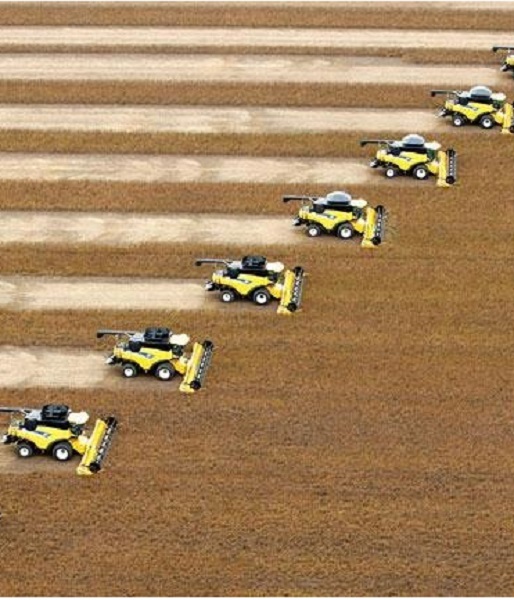
Answer 2: The agricultural management method that was retained in the framework of the Project's feasibility studies, namely "precision agriculture", allows hundreds of thousands of hectares to be quickly implemented and easily managed. It’s a question of technology.
Answer 3: If we were allowed to answer a question with a question, we would say "why what works elsewhere should not work in Cameroon, a country with significant agricultural production potential?"
Réponse :
The designers of the Project studied the causes of the failures of these three companies and took them into account whenever technological choices had to be made.
Public limited company under Cameroonian law with a capital of CFAF 10 million, which is currently being increased, headquartered in Yaoundé and with offices in Nanga Eboko and Douala.
Created on October 31, 2009, its capital is open to investors such as the State of Cameroon, national public or private companies, Development Finance Organizations, private investment funds, individuals.
Copyright ©2023 COMAGRI All Rights Reserved